Budgeting is the process of creating a plan to manage your income and expenses over a specific period of time. It helps you allocate your money toward necessary expenses, savings, and financial goals while ensuring you don’t spend more than you earn.
In simple terms, budgeting means deciding in advance how you will spend your money.
Budget Cycle:
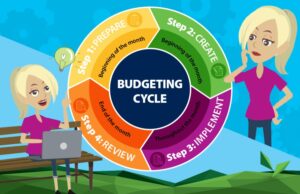
Key Elements of Budgeting
-
Income – The total money you earn (salary, business, freelancing, etc.)
-
Expenses – All the money you spend (bills, groceries, rent, etc.)
-
Savings & Investments – Setting aside money for future needs or emergencies
-
Goals – Financial targets like buying a car, paying off debt, or going on vacation
Why Is Budgeting Important?
-
Gives Control Over Your Money
A budget helps you make informed decisions about how and where to spend, save, and invest your money. -
Helps You Achieve Financial Goals
Whether it’s buying a home, saving for a vacation, or retiring early, a budget acts as a roadmap. -
Prepares You for Emergencies
Budgeting makes room for an emergency fund, which can protect you from unexpected expenses. -
Reduces Financial Stress
Knowing where your money is going and having a plan reduces anxiety about bills and debts.
Steps to Create a Simple Budget
-
Track Your Income
Know how much money you’re bringing in every month from all sources. -
List All Your Expenses
Include both fixed expenses (like rent, EMIs, utilities) and variable ones (like groceries, dining, and entertainment). -
Set Financial Goals
Decide what you’re budgeting for: saving for a car, paying off debt, or building an emergency fund. -
Make Adjustments
Compare your income with your expenses. If you’re spending more than you earn, look for areas to cut back. -
Monitor and Review Regularly
Check your budget monthly to see what’s working and what needs to change.
Budgeting Tips for Beginners
-
Use the 50/30/20 rule: 50% for needs, 30% for wants, and 20% for savings.
-
Use free budgeting apps like Mint, YNAB, or Google Sheets.
-
Automate your savings.
-
Review your budget regularly and adjust as life changes.
Lets understand with an Example of a Monthly Budget (Income: ₹40,000)
Let’s say you earn ₹40,000 per month. Here’s how you might create a basic budget using the 50/30/20 rule:
💰 Total Monthly Income: ₹40,000
🟩 50% Needs (₹20,000)
These are essentials you must pay for to live and work:
-
Rent: ₹10,000
-
Groceries: ₹4,000
-
Electricity/Water Bills: ₹2,000
-
Transportation: ₹2,000
-
Phone/Internet: ₹2,000
🟦 30% Wants (₹12,000)
These are non-essentials, or things you enjoy:
-
Dining out: ₹3,000
-
Shopping: ₹2,000
-
Subscriptions (Netflix, Spotify, etc.): ₹1,000
-
Entertainment & Leisure: ₹2,000
-
Weekend travel: ₹4,000
🟨 20% Savings & Debt Repayment (₹8,000)
Money for future security or to pay off loans:
-
Emergency fund: ₹3,000
-
SIPs/Investments: ₹3,000
-
Loan repayment: ₹2,000
✅ Summary Table:
| Category | Amount |
| Needs (50%) | ₹20,000 |
| Wants (30%) | ₹12,000 |
| Savings & Debt (20%) | ₹8,000 |
| Total | ₹40,000 |
Conclusion
Budgeting isn’t about restricting yourself — it’s about empowering yourself. It’s a tool that can transform how you live and help you build the life you truly want. Start today, no matter how small your income. Remember, every great financial journey begins with a budget.